Gecko Framework
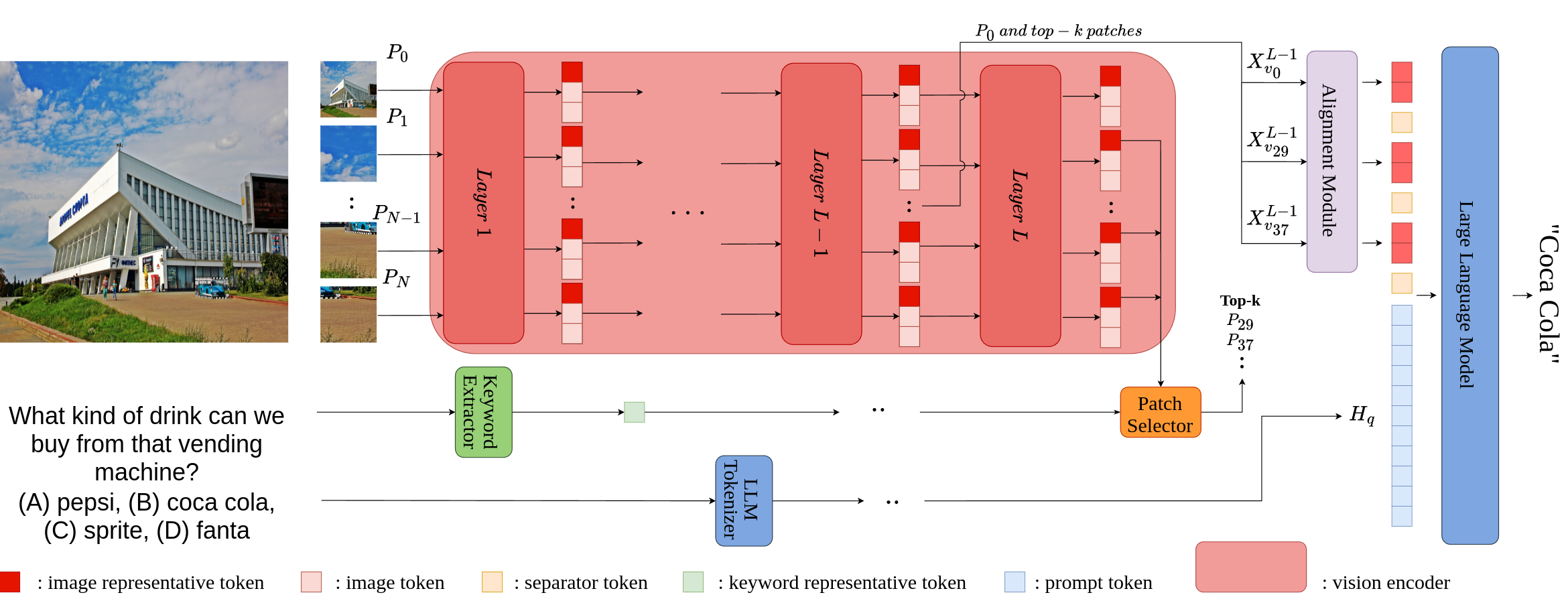
Gecko is a plug-and-play framework that allows Vision Language Model (VLM) to identify small objects in high-resolution images. As shown in below figure, Gecko can be summarized as follows:
- Image Cropping: Images are divided into patches that match the native resolution of the vision encoder. This ensures the preservation of fine details, especially those of small objects.
- Keyword Extraction: We use in-context learning with a native LLM to extract the "queried object" from the provided prompt.
- Patch Selection: The vision encoder and its text encoder counterpart leverage contrastive ability to identify and select the most relevant patches.
- LLM Inference: The selected patches are then passed to the LLM to generate a response to the given prompt. We use Mantis for its ability to handle multiple images effectively.
Multi V* Bench
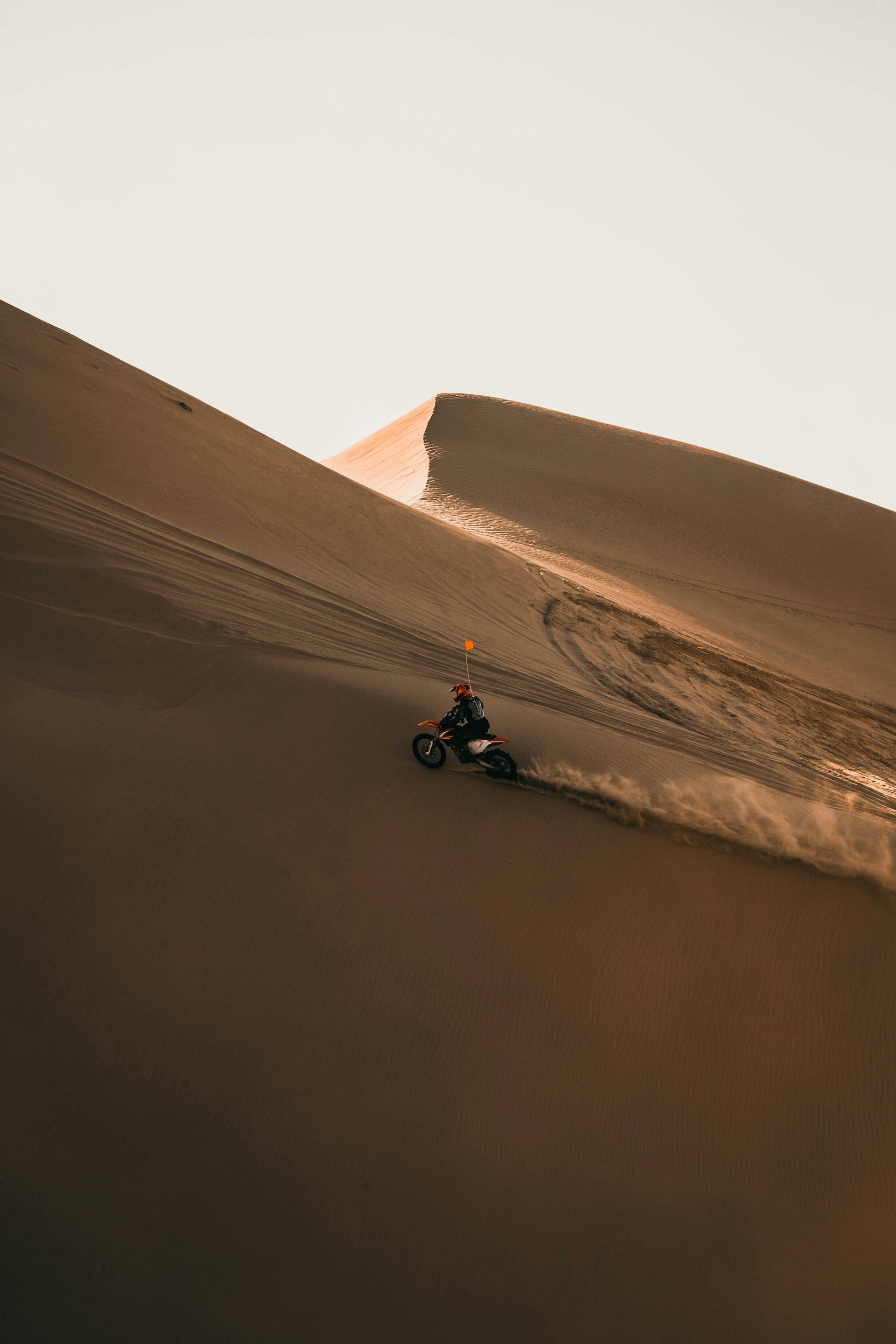
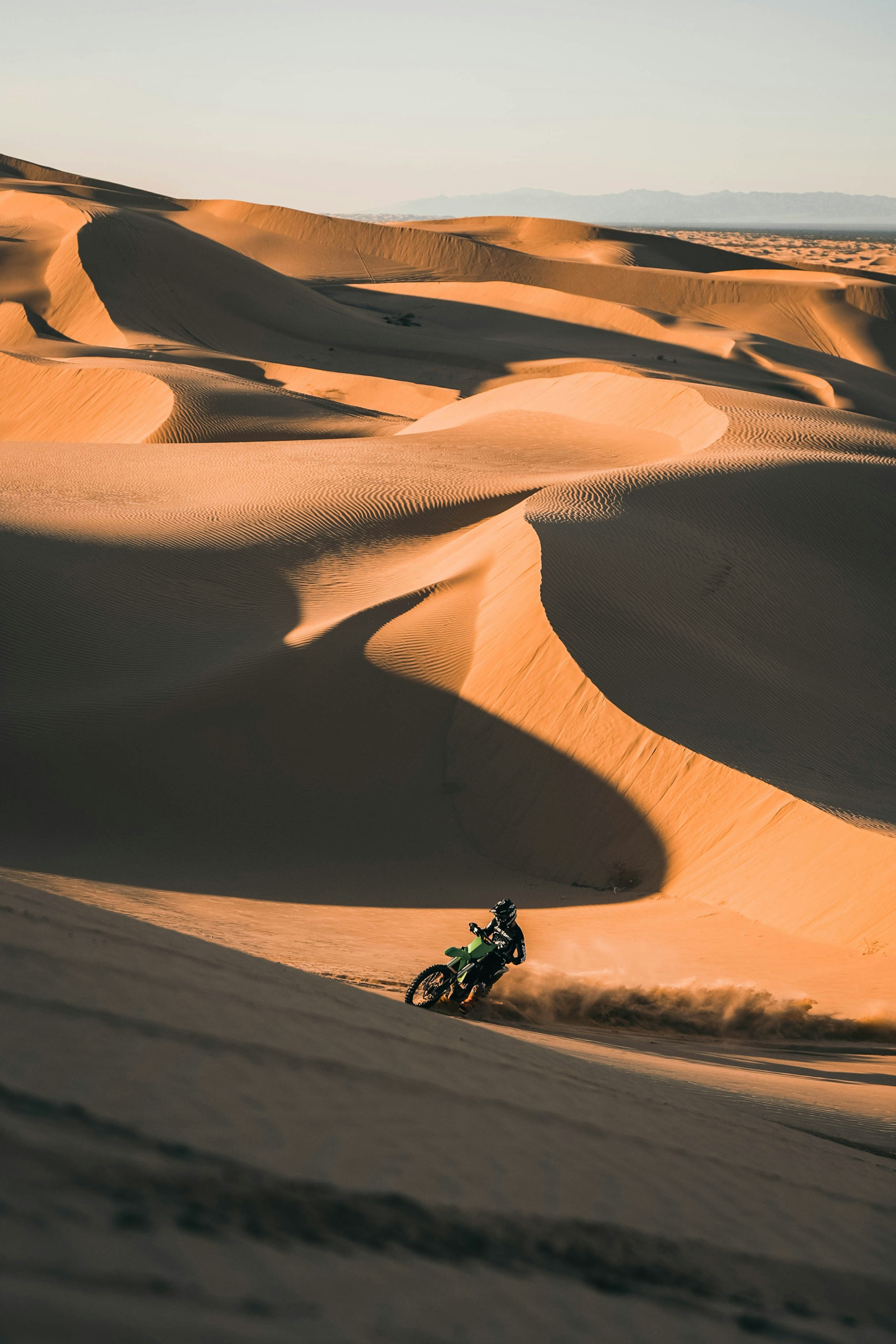
We adapted the Gecko framework to allow the model to find the small objects across multiple images. To test this, we curated a new benchmark called Multi V* Bench, which includes multi-image, high-resolution visual question and answer tasks with an average resolution of 1920 × 2475 pixels. The benchmark consists of four tasks, each comprising 20 samples:
- Attribute: Identify attributes differences of an object between images. There are 43 images in total with resolution of 1920 × 2622 pixels.
- Existence: Determine if an object exists between the images. There are 47 images in total with resolution of 1920 × 2419 pixels.
- Counting: Count the number of objects among the images. There are 56 images in total with resolution of 1919 × 2467 pixels.
- OCR: Extract or identify text from the images. There are 55 images in total with resolution of 1920 × 2414 pixels.
Result
| Method | Attribute (%)↑ | OCR (%)↑ | Existence (%)↑ | Count (%)↑ | Overall (%)↑ | Inference Time (sample/s)↓ |
|---|---|---|---|---|---|---|
| Open‑source models | ||||||
| Mantis‑CLIP ‡ | 35.0 | 20.0 | 35.0 | 30.0 | 30.0 | 0.749 |
| Mantis‑SigLIP ‡ | 50.0 | 50.0 | 25.0 | 50.0 | 43.75 | 0.774 |
| High resolution models | ||||||
| LLaVA‑NeXT‑Interleave | 50.0 | 45.0 | 45.0 | 35.0 | 43.75 | 0.852 |
| Private models | ||||||
| GPT‑4V Preview | 30.0 | 60.0 | 45.0 | 25.0 | 40.0 | – |
| GPT‑4 Turbo | 35.0 | 60.0 | 45.0 | 20.0 | 40.0 | – |
| GPT‑4o | 70.0 | 65.0 | 55.0 | 55.0 | 61.25 | – |
| GPT‑4o Mini | 45.0 | 65.0 | 50.0 | 15.0 | 43.75 | – |
| Ours‑CLIP | 60.0 | 50.0 | 45.0 | 45.0 | 50.0 | 8.099 |
| Ours‑SigLIP | 45.0 | 75.0 | 45.0 | 40.0 | 51.25 | 7.194 |
BibTeX
  @misc{alferro2024gecko,
          author={Alferro, Farros and Suganuma, Masanori and Okatani, Takayuki},
          title={Guidance from Keyword for Identifying Small Details in High-Resolution Images with Vision-Language Models},
          publisher={https://github.com/farrosalferro/gecko},
          year={2024},
  }

  @inproceedings{Jiang2024MANTISIM,
    title={MANTIS: Interleaved Multi-Image Instruction Tuning},
    author={Dongfu Jiang and Xuan He and Huaye Zeng and Cong Wei and Max W.F. Ku and Qian Liu and Wenhu Chen},
    publisher={arXiv2405.01483}
    year={2024},
  }
Acknowledgement
This website is adapted from Nerfies, licensed under a Creative Commons Attribution-ShareAlike 4.0 International License. We thank the Mantis team for open-sourcing such wonderful models and LLaMA team for giving us access to their models.